
Apostille FAQ: straight answers to the questions we hear most
What an apostille is, who issues it, how long it takes and what it costs, each answer linked to its full guide.
Apostille questions, answered in one place
An apostille is the certificate a state office, or the U.S. Department of State for federal records, attaches to a U.S. public document so it can be used in the 129 countries where the Hague Apostille Convention is in force. Below are the 12 questions people search for most, then 32 more by topic, each linked to a full guide.
We are a private document authentication service in Tewksbury, Massachusetts, not a government office and not a law firm. If your question is not here, call us at (978) 424-4629, Monday to Friday, 9:00 AM to 5:00 PM Eastern, or send us a photo of your document for a free review.
The most asked apostille questions
Short answers to what people search for most, each with a link to the full guide. Anything else, call us at (978) 424-4629.
What is an apostille?
An apostille is a certificate that lets a U.S. public document be used in another country that belongs to the 1961 Hague Apostille Convention. A state office, or the U.S. Department of State for federal records, attaches it to your document. It confirms the signature, capacity and seal of the official who signed the document. It does not verify what the document says, and it does not translate it.
Which countries accept an apostille?
The countries where the Hague Apostille Convention is in force. On September 28, 2026, the HCCH status table listed 130 contracting parties, with the Convention in force in 129, including Mexico, Italy, Spain, Portugal, Germany, India, Japan and South Korea. It took effect for China in 2023, Canada in 2024 and Vietnam in 2026. The United Arab Emirates, Qatar, Kuwait and Egypt are not members and need embassy legalization.
What is the difference between an apostille and a notary?
A notary public confirms who signed a document and that they signed or swore in front of the notary. An apostille is a government certificate, from a Secretary of State or the U.S. Department of State, confirming that the notary or official who signed is genuine, so the document can be used abroad. For a private document such as a power of attorney, the notarization comes first and the apostille certifies it.
Where can I get an apostille?
From the apostille office of the state that issued or notarized your document, usually its Secretary of State, which may be far from where you live. Federal records, such as an FBI background check, go to the U.S. Department of State in Washington, D.C. Most offices accept mail, and we file with all of them from Tewksbury, Massachusetts, where you can also drop documents off in person.
How do I get an apostille in my state?
Start with the right version of the document: a certified copy from the office that issued it, or the original signed before a notary. Then file it with the apostille office of the state that issued or notarized it, with that office's request form and fee, after any county step New York or Maryland requires. Or send it to us, and we check it, file it and return it tracked.
How do I get an FBI background check apostilled?
Request your Identity History Summary directly from the FBI, online at edo.cjis.gov, with fingerprints taken by local police or a fingerprinting service. The result carries an FBI official's signature, and only the U.S. Department of State can apostille it. A notarized copy cannot be apostilled. Our FBI report apostille is $199.95 with the federal fee included, takes 2 to 6 weeks and is fully remote.
How do I apostille a birth certificate?
Order a certified copy from the vital records office of the state where the birth was registered, in the long form if the office abroad asks for it. Then file it with that state's apostille office: the Secretary of State in most states, or the Lieutenant Governor in Alaska, Hawaii and Utah. Photocopies and hospital keepsake certificates are refused, so we check your copy before we file it.
How do I get a document translated and apostilled?
Ask the office receiving it which translation it accepts before you order one. Some take a certified translation made in the United States. Others want a sworn translator in their own country, who usually translates the document and its apostille together, so the apostille comes first. We provide certified translation in more than 100 languages and confirm the format and the order of the steps before we start.
How much does an apostille cost?
State fees are low, from $2 per document in Illinois to $40 in Connecticut as published in mid-2026, and the U.S. Department of State charges $20 for federal records. With Apostille Depot, Economy is $149.95 and Express is $199.95, government fee included, and an FBI report apostille is $199.95. Same-day rush for Massachusetts and New Hampshire documents is $385.95, and legalization is quoted per country.
How long does an apostille take?
It depends on the office. State offices range from same-day counter service to several weeks by mail, and the U.S. Department of State processes mailed federal requests within five weeks, as published in 2026. With us, Express takes 1 to 5 business days in most states, Economy 1 to 3 weeks and an FBI report 2 to 6 weeks. Massachusetts and New Hampshire documents can go same-day.
Does an apostille expire?
No. An apostille has no expiry date, and it stays valid for as long as it remains attached to the document it certifies. The office receiving your document may still want the document itself recently issued, such as a new birth certificate or a recent FBI check, and each office sets its own rule. Confirm it with the consulate, court or lawyer handling your file before you order.
Can I get an apostille online?
You can order online, and an FBI report apostille is fully remote: you email us the electronic FBI result and never mail anything. For most state documents, the apostille office certifies the paper certified copy or notarized original, so that document has to reach us by mail or drop-off. Our application form takes about three minutes, and you follow each stage in your online order tracker.
Apostille questions by topic
32 more questions in 8 groups: basics, documents, states, federal records, countries and legalization, timing, pricing and payment, and ordering and shipping.
Updated September 2026. Reviewed by Hanson Webb, founder of Apostille Depot.
Apostille basics
What an apostille is, who issues one and what it does not do. Our guide to what an apostille is covers the Convention in full.
What does an apostille look like?
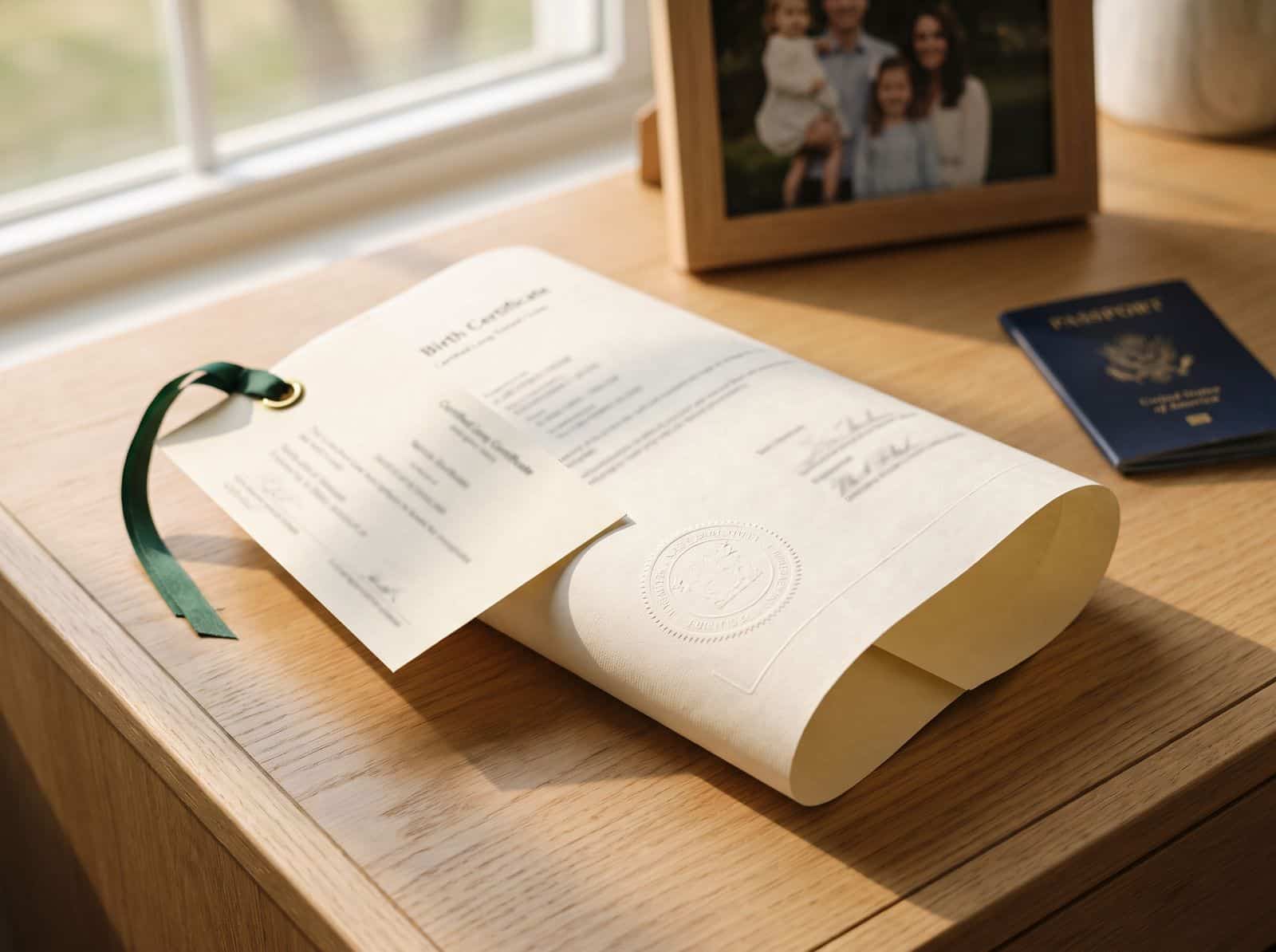
It is a square certificate with 10 numbered fields, based on the model in the Hague Convention: the country, who signed your document, the capacity in which they signed, the seal on it, the place and date, the issuing authority, a certificate number, and that authority's seal and signature. The office places it on your document or attaches it as an extra page. Never detach it, because a detached apostille loses its effect.
Who issues apostilles in the United States?
The office with authority over the official who signed your document. State documents are apostilled by the Secretary of State of the issuing state, by the Lieutenant Governor in Alaska, Hawaii and Utah, and by the Office of the Secretary of the District of Columbia for D.C. documents. Federal records, such as FBI background checks, are apostilled by the U.S. Department of State Office of Authentications in Washington, D.C.
Read state vs federal apostilles
Can a notary or a U.S. embassy issue an apostille?
No. Only designated government offices issue apostilles, which for U.S. documents means a state apostille office or the U.S. Department of State. A notary can only notarize a signature, which the notary's state can then apostille. U.S. embassies and consulates abroad say they cannot apostille U.S. documents. A foreign embassy in the United States does not apostille them either, though for a country outside the Convention it legalizes them once the U.S. steps are done.
How notaries and apostilles fit together
Can I get an apostille myself?
Yes. You can send your document straight to the right state office, or to the U.S. Department of State for a federal record, with that office's request form and fee. A service earns its fee when you live far from the office, the document needs a new certified copy, a notarization or a county step first, you are on a deadline, or the destination needs embassy legalization.
When it makes sense to file it yourself
Is Apostille Depot a government office?
No. Apostille Depot is a private document authentication service in Tewksbury, Massachusetts, a Neighborhood Parcel company, in business since 2012. We are not a government office and not a law firm, and we do not give legal advice. The apostille itself always comes from a state office or the U.S. Department of State. We prepare your document, file it with the right office, follow up and return it to you.
Which documents can be apostilled
The records we apostille most, and the version each one needs. Our apostille services page lists every document type.
What documents can be apostilled?
Any U.S. public document that a government office will certify: birth, marriage and death certificates, divorce decrees and court records, notarized documents such as powers of attorney and affidavits, diplomas and transcripts, company records and federal records such as FBI background checks. Each one has to be in the right form, usually a certified copy or a notarized original. If yours is not listed, send us a photo.
Browse every document we apostille
How do I apostille a marriage or death certificate?
The same way as a birth certificate. Order a certified copy from the office that keeps the record, usually the state vital records office or the county or town clerk, in the state where the marriage or death was recorded. That state's apostille office then certifies the official's signature on the copy. Photocopies are refused, and your current home state cannot apostille a record from another state.
Marriage certificate apostilles
Death certificate apostilles
How do I apostille a diploma or transcript?
Usually the school's registrar signs a certified copy or a statement before a notary in the school's state, and that state apostilles the notarization, not the diploma itself. The state that counts is the one where the school is, even if you now live somewhere else. A few states also accept a notarized copy of the original. We check your state's rule in the free review before you order.
Diploma and transcript apostilles
Can you apostille a power of attorney or an affidavit?
Yes. You sign it before a notary, who completes the notarial certificate, and the state that commissioned the notary apostilles it, after the county step in New York or Maryland. The notary's state decides, not where you live or where the property is. If you can visit Tewksbury, you can sign before our notary, and the document is then apostilled by Massachusetts.
Can you apostille a copy of my passport?
Not the passport book itself, but usually a properly notarized copy of it, which the state where the notary is commissioned apostilles. The same goes for a copy of a driver's license, green card or Social Security card. A few states refuse. Massachusetts does not authenticate notarized copies of government-issued documents, so we tell you which state's notary to use. Confirm the format with the office receiving it.
Passport copy apostilles, state by state
How do I apostille company documents?
A certificate of good standing or a certified copy of the articles comes from the business filing office of the state where the company was formed, and that state apostilles it. Board resolutions and officer certificates are signed before a notary first, and the notary's state apostilles them. A Delaware company's certificates go to Delaware, wherever the company does business.
State apostille offices
Every state runs its own apostille office. The apostille by state directory lists each one with its fee, and the two states closest to our office have their own guides: Massachusetts and New Hampshire.
Which state apostilles my document?
The state whose official signed it or whose notary notarized it. A birth certificate goes to the state where the birth was registered, a court record to the court's state, a notarized document to the notary's state and a company document to the state of formation. Where you live now does not change the answer, and neither does the country where the document will be used.
Which office apostilles your document
Can my home state apostille a document from another state?
No. Each state apostilles only documents signed by its own officials and notaries. Massachusetts, for example, does not authenticate out-of-state documents, so a Texas birth certificate goes to Texas even if you live in Boston. If your documents come from several states, send them to us together, and we file each one with its own office under one order.
Why do New York and Maryland documents need an extra step?
Both add a county certification for notarized documents. In New York, the county clerk where the notary is registered certifies the notary before the Department of State issues the apostille. In Maryland, the Clerk of the Circuit Court in the notary's county certifies it before the Secretary of State does. Skipping that step sends the document back, so we build it into the order.
Federal records and the U.S. Department of State
Records signed by a federal official follow their own route, through the U.S. Department of State Office of Authentications in Washington, D.C.
Which documents go to the U.S. Department of State?
Documents signed by a federal official. The common ones are FBI background checks, naturalization certificates, DD-214 discharge papers, IRS and Social Security letters and USCIS notices. The Office of Authentications in Washington, D.C. apostilles them for $20 per document, and no Secretary of State can. For a country outside the Hague Convention, the same office issues an authentication certificate instead.
Can a notarized copy of a federal record be apostilled?
No. A notarized copy of an FBI background check, a naturalization certificate, a DD-214, an IRS or Social Security letter or a USCIS notice cannot be apostilled, by a state or by the federal office. Those records take the federal route only, in a version the U.S. Department of State accepts. ID is different: a properly notarized copy of a passport, driver's license, green card or Social Security card can usually be apostilled by the state where the notary is commissioned.
Immigration and federal documents
How do I get an FBI background check for use abroad?
Request your Identity History Summary directly from the FBI, online at edo.cjis.gov or by mail, or through an FBI-approved channeler if you are in the United States. The FBI charges $18. Fingerprints are taken by local police or a fingerprinting service, and U.S. embassies generally do not take them for this purpose. The result then goes to the U.S. Department of State for the apostille.
How to get an FBI background check
Can a Social Security letter be apostilled?
Yes, by the U.S. Department of State only, because it is a federal record. The office certifies an SSA official's signature and the agency's seal, so the letter has to carry both, and a page you print at home from your online account usually does not. Ask a Social Security office for a signed and sealed letter, and send us a photo so we can check it before you order.
Countries, the Hague Convention and legalization
The destination decides whether you need an apostille or embassy legalization. Check the Hague apostille country list for yours, or the official HCCH status table.
What if my country is not in the Hague Convention?
Then the document needs legalization instead of an apostille. A state document gets a certificate from the state, the U.S. Department of State usually authenticates it for $20 per document, and the destination's embassy or consulate legalizes it. Federal records start at the U.S. Department of State. The United Arab Emirates, Qatar, Kuwait and Egypt are common examples, and we quote the chain per country.
Legalization for non-Hague countries
What is the difference between an apostille, authentication and legalization?
An apostille is one certificate that Hague Convention countries accept without any embassy step. Authentication is the U.S. certificate used for countries outside the Convention, issued by a state office or the U.S. Department of State. Legalization is the stamp the destination's embassy or consulate adds on top of that authentication. Your destination decides which route applies, not the document.
Apostille vs authentication vs legalization
Do China, Canada and Vietnam accept apostilles now?
Yes. The Apostille Convention entered into force for China on November 7, 2023, for Canada on January 11, 2024 and for Vietnam on September 11, 2026, so U.S. documents for all three need an apostille, not embassy legalization. Saudi Arabia and Algeria have joined too. Thailand has also joined, but the Convention only takes effect there on February 28, 2027, and legalization applies until then.
Which documents do I need for a visa, residency or citizenship abroad?
The consulate or your lawyer abroad sets the list, so start with their checklist. Residency files often include a birth certificate, a marriage certificate, an FBI background check and proof of income. Citizenship by descent usually means birth, marriage and death certificates across two or three generations. Each document is apostilled by the office with authority over it, so one file can involve several states.
Apostille timing
How long each route takes, and the two ways to go faster. For the headline answer, see how long an apostille takes in the most asked questions above.
How long does it take to legalize a document?
Longer than an apostille, because legalization is a chain and each office waits for the one before it: the state certificate, then the U.S. Department of State, which processes mailed requests within five weeks as published in 2026, then the embassy or consulate. As published in September 2026, Egypt's office in Washington allowed 10 business days for mailed personal documents. We quote your timeline with the price.
Can I get a same-day apostille?
Yes, for documents issued or notarized in Massachusetts or New Hampshire that are going to a Hague Convention country and are ready to file. Our same-day rush costs $385.95 with the state fee included and has a guaranteed 24-hour turnaround. Documents from other states go on Express, 1 to 5 business days in most states, and federal records cannot go same-day.
Apostille prices and payment
What you pay, what is included and how refunds work. Our pricing and process page has the full detail.
Is the government fee included in your prices?
Yes. Every package price includes the government fee: the state fee for a state document, or the U.S. Department of State's $20 fee for a federal record. Economy is $149.95, Express $199.95 and an FBI report apostille $199.95. The extras are the ones you choose, such as translation or a courier upgrade, plus embassy fees for legalization. Ordering several documents? Ask us about a volume discount.
How much does embassy legalization cost?
We quote it per country and per document before you pay, because every embassy sets its own fees and rules. The quote covers the state certificate, the U.S. Department of State at $20 per document, the embassy's fee for your document type, any translation and return shipping. Commercial documents often cost more at the embassy than personal ones. Nothing is filed until you approve the quote.
How do I pay, and what is your refund policy?
You pay when you place your order, at a secure checkout by card or PayPal. Once an order has been submitted to a government office, fees are non-refundable, because the government fee is paid on your behalf. If you cancel before that, we may refund the part of our service fee for work not yet done, less costs already paid. The free review helps you avoid ordering the wrong service.
Ordering and shipping
How to get your document to us, and back to you.
How do I order an apostille from you?
Fill in our online application form, which takes about three minutes, and pay at checkout. Then mail the document to our Tewksbury office, drop it off in person, or email us an electronic FBI result. Not sure what to order? Send a photo for a free review first, and we will confirm the office, the route and the price before you pay anything.
Do I send the original document or a copy?
Send the version the apostille office can certify. For a vital record, that is a certified copy from the vital records office, never a photocopy. For a document you sign, it is the original signed before a notary. For an FBI check, it is the FBI's own result, which you can email. Keep a copy of everything you send, and ask us first if you are unsure which version you hold.
Can I drop off documents at your office?
Yes. Drop-off and pickup are welcome at 1215 Main St, Unit 115, Tewksbury, MA 01876, Monday to Friday, 9:00 AM to 5:00 PM Eastern. We check your document with you before you pay, and a notary is available if a signature still needs notarizing. Most clients never visit, though. They order online and mail their documents to us.
Contact details and directions
Can I order from outside the United States?
Yes. Living abroad changes the shipping, not the office: your U.S. document is still apostilled by the state that issued or notarized it, or by the U.S. Department of State for federal records. Mail it to us by tracked international courier, or email an electronic FBI result, and we return the finished document to any address in the world by the courier you choose.
Apostilles for American expats
How is my document returned, and can I track it?
Economy orders return by first-class mail, and Express and FBI report orders by priority mail. A courier upgrade sends the document faster or to an address abroad, or you can pick it up in Tewksbury. You can follow each stage in your online order tracker. For documents that are hard to replace, use trackable, insured shipping in both directions.
Still have a question? Ask us about your document.
Send a photo for a free review and tell us the destination. We confirm the office, the route and the total price before you pay anything.