Apostille for Spain: visa documents in the right order
FBI checks, birth and marriage certificates and powers of attorney for Spanish visas, weddings and property purchases, apostilled in the order consulates expect.
Apostille for Spain at a glance
Spain is a Hague Apostille country, so a U.S. document needs one apostille and no embassy legalization. State records are apostilled by the state that issued them, and the FBI background check only by the U.S. Department of State. Spanish offices then usually want a Spanish translation, and some insist on a sworn translator.
The order matters as much as the documents: apostille first, translation second, and an FBI check timed so it is still recent at your consulate appointment. The table answers the questions we hear most, and the guide below takes each one in turn.
| Question | Short answer |
|---|---|
| Is Spain a Hague country? | Yes, since September 25, 1978. One apostille, no embassy legalization. |
| Who apostilles birth, marriage and divorce records? | The Secretary of State of the state that issued them, or the Lieutenant Governor in Alaska, Hawaii and Utah. |
| Who apostilles the FBI check? | Only the U.S. Department of State. Spanish consulates want the FBI check itself, not a state or local police certificate. |
| How far back must the criminal record go? | Non-lucrative visa: everywhere you lived in the last five years. Digital nomad visa: the last two years, plus a sworn declaration covering five. |
| Which translation? | Into Spanish. Boston accepts a sworn or certified translator for the FBI check, Miami asks for a sworn translator, and Spain's degree recognition office wants a traductor jurado. |
| Medical certificate | On the doctor's letterhead, signed and stamped, in Spanish or translated. Boston's student checklist says it needs no apostille. |
| Is the Golden Visa open? | No. It closed to new applications on April 3, 2025. Valid permits keep their validity and can be renewed. |
| Non-lucrative income test | 400 percent of IPREM, Spain's public income indicator, plus 100 percent for each family member. No work of any kind, including remote work. |
| Digital nomad income test | 200 percent of the minimum wage (SMI). The 2026 SMI is €1,221 a month in 14 payments, so the bar is €34,188 a year, about €2,849 a month. |
| What do you charge? | Economy $149.95, Express $199.95 and FBI report $199.95 per document, government fee included. |
Checked against official Spanish and U.S. government pages in September 2026, including the checklists of the Consulates General of Spain in Boston and Miami. Each consulate publishes its own list, and the one that serves your state has the final word.
State records
Birth, marriage and death certificates, divorce decrees, diplomas and notarized documents such as a power of attorney. The apostille comes from the state that issued the record or commissioned the notary, and the translation comes after it.
Federal records
The FBI background check and other federal records, apostilled in Washington, D.C., for a $20 government fee per document. A notarized copy of an FBI report, a naturalization certificate or a DD-214 cannot be apostilled.
Apostille for Spain, step by step
The Convention, the visa routes, the end of the Golden Visa, the FBI check, sworn translation, the medical certificate, civil records, marriage, the NIE and what comes after you arrive.
Updated September 2026. Reviewed by Hanson Webb, founder of Apostille Depot.
Is Spain a Hague apostille country?
Yes. The HCCH status table lists the Apostille Convention in force for Spain since September 25, 1978, and for the United States since October 15, 1981. A U.S. public document therefore needs one apostille from the correct U.S. office before it is used in Spain, with no embassy or consular legalization on top.
Spanish authorities accept the apostille as the legalization of a U.S. document. The Ministry of Science, Innovation and Universities, which recognizes foreign degrees, spells it out on its portal: academic documents must be legalized in the country that issued them, through the diplomatic chain or with the Hague apostille, and documents from the United States need it whatever their date of issue. Our Hague apostille country list shows every member and the date the Convention took effect for it.
An apostille is a certificate with 10 numbered fields. It confirms the signature, capacity and seal of the official who signed your document, such as a vital records registrar, a court clerk or a notary. It does not confirm the contents and does not translate anything, which is why Spanish offices ask for a translation as a separate step. The same ministry portal notes that a legalization has no expiry date, and that electronic apostilles are valid as long as their QR code or verification code works. Our guide to what an apostille is covers the details.
Which Spanish visa? The U.S. documents each route needs
With the Golden Visa closed, most Americans moving to Spain use the non-lucrative visa, the digital nomad visa or a student visa. The non-lucrative and digital nomad routes ask adult applicants for an apostilled FBI check, and longer study stays do too. Family members who come along prove the relationship with apostilled birth and marriage certificates.
| Route | Who it is for | U.S. documents to apostille | Money test |
|---|---|---|---|
| Non-lucrative residence visa | People who will live in Spain without working, including remotely, on savings, pensions or passive income | FBI check, plus marriage and birth certificates for family members | 400 percent of IPREM, plus 100 percent per family member |
| Digital nomad (telework) visa | Remote employees of companies outside Spain, and freelancers whose Spanish clients stay within 20 percent of their work | FBI check, family records, and company or degree documents from the U.S. | 200 percent of the SMI, plus 75 percent for the first family member and 25 percent for each other one |
| Student visa | Students, trainees and volunteers accepted by a Spanish school or program | FBI check for stays over 180 days, plus a birth certificate for some minors | Boston lists at least $700 a month for the student |
| Family members | Spouse or registered partner, children and dependent parents of the main applicant | Marriage, birth or partnership certificates | Counted in the main applicant's income test |
The non-lucrative visa
The non-lucrative visa is for living in Spain on your own means. The Consulate General of Spain in Boston is explicit that it does not allow any work or professional activity, including remote work, and that it is not a digital nomad visa. Its non-lucrative visa checklist asks for the national visa form and the EX-01 residence form, a photo, your passport, proof of means equal to 400 percent of IPREM, Spain's public income indicator, plus 100 percent for each family member, health insurance from an insurer authorized in Spain with no copays or deductibles, the apostilled FBI check with a translation, a medical certificate and proof of accommodation, such as a lease or a title deed.
A few details from the same checklist save time. Bank statements and IRS returns need no translation. A retirement account such as an IRA or 401(k) is not accepted as proof of means for people who are not officially retired. Boston handles these applications itself, by email appointment, rather than through BLS, its visa service provider, and the legal period for a decision is three months. If you prove income with a Social Security letter and a consulate wants it apostilled, it is a federal record, so it goes to the U.S. Department of State, and a notarized copy cannot be apostilled. See Social Security letter apostilles.
The digital nomad visa
The international telework visa, known as the digital nomad visa, was added to Law 14/2013 by Law 28/2022 and took effect on December 23, 2022. It is for people who work remotely, using only computer and telecommunication tools, for companies based outside Spain. Employees may only work for companies outside Spain, while freelancers may take Spanish clients for up to 20 percent of their work. The law asks for a university degree, a vocational or business school qualification or at least three years of professional experience, a company that has been active for at least a year, and a working relationship of at least the last three months.
The consulate in Miami publishes a full checklist: an employer certificate confirming the contract, the salary and permission to work remotely from Spain, a company registry certificate showing the company is at least one year old, your degree or proof of experience, Spanish Social Security registration or a certificate of coverage under a Social Security agreement, and income of 200 percent of the SMI, plus 75 percent for the first family member and 25 percent for each additional one. Foreign documents must be apostilled and officially translated. For a U.S. company, the registry is the Secretary of State of the state where it was formed, so the certificate comes from that office and is apostilled by the same state. Miami also asks applicants to get a NIE before they apply, and notes that people already in Spain can apply for the telework residence permit there instead. See corporate document apostilles.
Student visas and degree recognition
Student visas cover studies, training, internships and volunteering longer than the Schengen visa-free period. The consulate in Boston applies the immigration regulation in force since May 20, 2025: the visa runs from 30 days before your program starts to 15 days after it ends, a medical certificate is required for these longer stays, and a criminal record certificate is required when the total stay, counting those extra days, passes 180 days. For Americans, that certificate is the FBI check with its federal apostille and a Spanish translation. Boston warns that the process takes about two months, has no expedited service and should start at least two months before your flight. Minors also need an apostilled birth certificate and an apostilled travel authorization from their parents.
To have a U.S. degree recognized in Spain, through homologación or equivalencia, the ministry's portal says U.S. academic documents must be legalized, meaning apostilled, whatever their date of issue, with an official translation, and it lists a fee of €166.50. The registrar's signature on a diploma is usually notarized first, and the school's state apostilles it. See diploma and transcript apostilles and our page for students abroad.
Family members
Family members who apply with you prove the relationship with certified civil records: a marriage certificate for a spouse, a certificate of registration for an unmarried partner and birth certificates for children. The Boston checklist asks for all of them to be apostilled and, where needed, translated into Spanish, and it wants marriage and partnership certificates recently issued, so check its window before you order new copies. Adult children also need proof that they depend on you financially, and parents proof that they depend on you and form part of the family unit.
Spain's Golden Visa ended on April 3, 2025
Spain closed its investor visa to new applicants on April 3, 2025. Organic Law 1/2025 emptied the investor articles of Law 14/2013, and the change took effect three months after publication. Applications filed before that date are decided under the old rules, and investor visas and permits that were valid keep their validity and can be renewed.
The details are in the text of Organic Law 1/2025 in Spain's official gazette, the BOE. Its twenty-first final provision left articles 63 to 67 of Law 14/2013 without content and added two transitional rules. The first lets investors and their family members who applied before the change receive the visa or permit under the rules in force when they applied. The second says that investor visas and permits valid when the change took effect keep that validity for the period they were issued, and that renewals are decided under the rules in force when the first permit was granted.
What this means in practice:
- New investors no longer get residence from a property purchase or another investment in Spain. For living there on your own means, the non-lucrative visa is the route.
- Existing holders renew under the rules that applied when their first permit was granted. Ask your lawyer which U.S. records the renewal needs.
- Buying property is separate from residence. It runs on the NIE and, if you cannot attend the signing, a power of attorney. See the NIE and property section.
If a Golden Visa was the reason you looked at Spain, Portugal still runs one through fund, research, culture and company routes, with real estate excluded. See our apostille guide for Portugal and our Golden Visa document page.
Apostille for Spain: the FBI background check
Spanish consulates in the United States ask for the FBI Identity History Summary, based on fingerprints, not a state or local police check. It must carry the apostille of the U.S. Department of State and a Spanish translation. The consulates in Boston and Miami both say state background checks are not accepted.
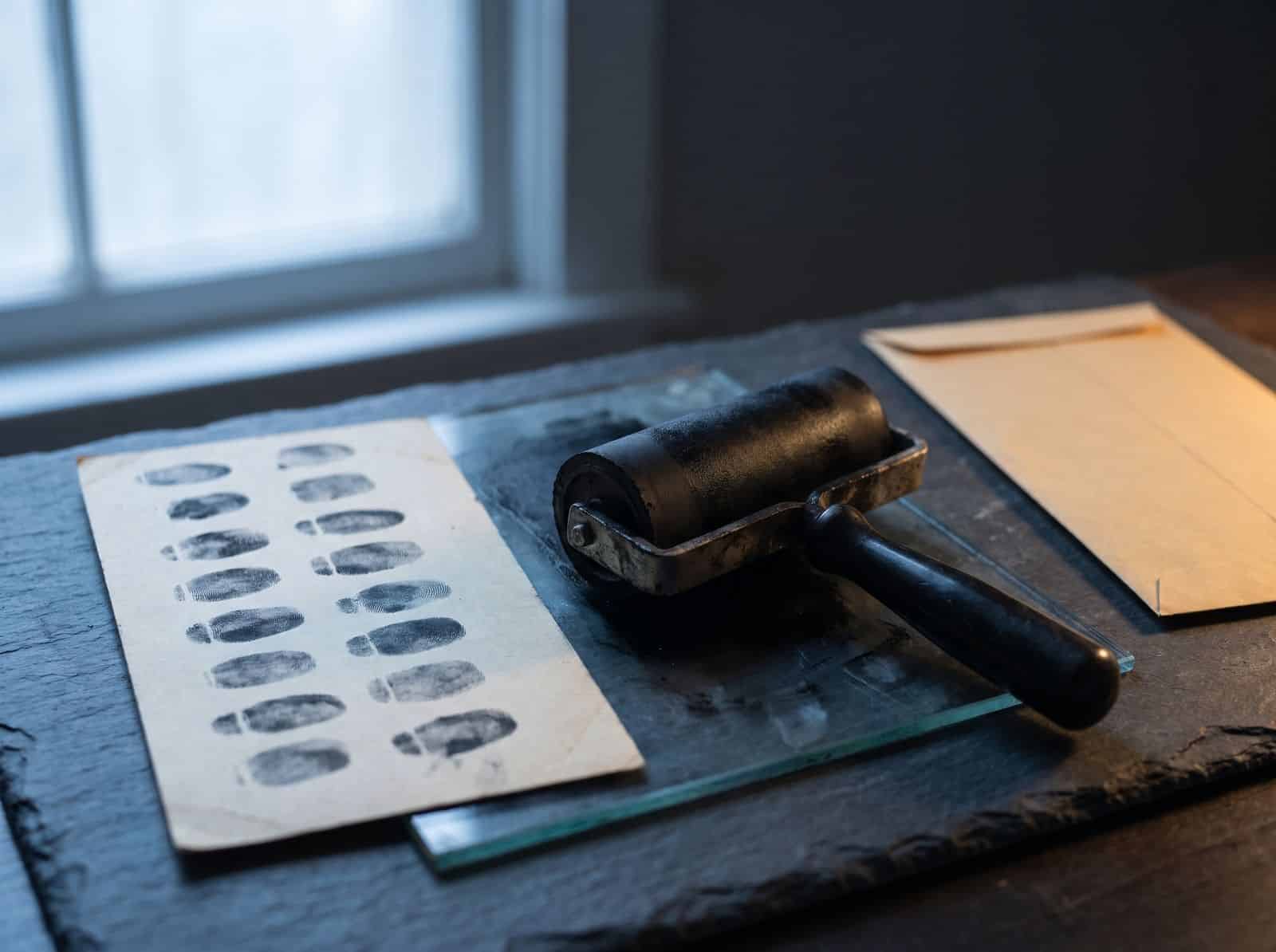
- Fingerprints. Have your prints taken on an FD-258 card by local police or a fingerprinting service. U.S. embassies generally do not take fingerprints for this purpose, which matters if you are already abroad.
- The FBI request. Request your Identity History Summary directly from the FBI, through its electronic departmental order at edo.cjis.gov. The result carries an FBI official's signature.
- The federal apostille. Only the U.S. Department of State can apostille it, for a $20 government fee, and a notarized copy of an FBI report cannot be apostilled. Our FBI report apostille is $199.95 and fully remote: you email us the electronic result.
- The translation. Into Spanish, by the kind of translator your consulate accepts. See the translation section.
How far back it goes. For the non-lucrative visa, the Boston consulate asks for a certificate covering everywhere you lived in the last five years, plus police records from any other country where you spent six months or more in that time, apostilled or legalized under that country's rules. For the digital nomad visa, Law 14/2013 looks at the last two years, plus a sworn declaration that you had no criminal record in the last five.
Handle it with care. The Boston consulate says it will not accept a criminal record certificate that has been tampered with or damaged, including damage from removed staples. Keep the apostille attached exactly as it arrives.
Timing. Consulates want a recent certificate, and the federal apostille takes weeks, so time the request to your appointment and confirm the window with your consulate. For the request itself, see how to get an FBI background check.
Traducción jurada: who translates your documents for Spain
Spanish offices want U.S. documents in Spanish, but not all accept the same translator. The ministry that recognizes foreign degrees defines an official translation as one by a traductor jurado appointed by the Foreign Ministry. For the FBI check, the consulate in Miami asks for a sworn translator, and the consulate in Boston accepts a sworn or certified one.
The clearest official statement comes from the ministry portal for recognizing foreign degrees. It says an official translation in Spain is made by a sworn translator appointed by the Ministry of Foreign Affairs, European Union and Cooperation, that translations by an official translator in another EU country are also valid, and that a translation by an official translator outside the EU needs the translator's signature legalized. It adds that the official translation must include the legalizations, which for a U.S. document means the apostille, and that translations do not expire. The Foreign Ministry publishes a searchable directory of sworn translators, and it includes translators based in the United States.
Consulates set their own rules for visa files. The Boston consulate asks for the FBI check translated by a sworn or certified translator, points applicants to the American Translators Association, and says the apostille on the FBI check needs no translation and the translation needs no apostille. The Miami consulate asks for a sworn translator. The U.S. Embassy in Madrid, for its part, tells Americans that U.S. documents for use in Spain need an apostille and an official Spanish translation.
- Ask the receiving office first which translator it accepts: sworn, or certified.
- Apostille first, translate second, so the translator can include the apostille when the office requires it.
- Skip what is not needed. The Boston consulate says bank statements and IRS returns for the non-lucrative visa need no translation.
We offer certified translation in more than 100 languages for offices that accept it. If your office requires a traducción jurada, we tell you before you order, so you can book a sworn translator from the Foreign Ministry's directory.
The medical certificate for Spanish visas
Residence visas and longer student visas ask for a medical certificate stating that you do not suffer from any disease that could have serious public health repercussions under the 2005 International Health Regulations. The consulate in Boston wants it on the doctor's letterhead, signed and stamped, in Spanish or translated, and its student checklist says it needs no apostille.
Boston offers a template for the wording, and since May 20, 2025 it asks for the certificate for every study stay longer than the Schengen visa-free period. If the certificate is written in English, it needs a Spanish translation. Consulates want a recent certificate, so ask yours how recent before the doctor's visit, and book the visit close to your appointment.
If a consulate does ask for an apostille, the certificate has to become a notarized document: the doctor signs it before a notary, and the state where the notary is commissioned apostilles it. Ask the consulate first, because the Boston checklist does not require it and a notarization you do not need only adds time.
Which state apostilles your documents for Spain?
The state that issued the record, or the state where the notary is commissioned for a notarized document. A Florida birth certificate goes to Florida and a New Jersey marriage certificate to New Jersey, wherever you live now. Your state of residence only decides which Spanish consulate handles your visa. Federal records go to the U.S. Department of State.
- Birth certificates for you and your children, as certified copies from the state or county vital records office. See birth certificate apostilles.
- Marriage certificates for a spouse, and partnership registrations for an unmarried partner. See marriage certificate apostilles.
- Divorce decrees and death certificates for an earlier marriage that ended, certified by the court clerk or vital records office. See divorce decree apostilles and death certificate apostilles.
- Notarized copies of IDs. A properly notarized copy of a passport, driver's license, green card or Social Security card can be apostilled by the state where the notary is commissioned, for offices that accept one. See passport copy apostilles.
- Federal records take the federal route only. An FBI check, a naturalization certificate, a DD-214, an IRS or Social Security letter or a USCIS notice goes to the U.S. Department of State, and a notarized copy of one of them cannot be apostilled. See immigration document apostilles.
Your consulate is a separate question. Spain's consulates in the United States each serve a set list of states. Boston serves Maine, Massachusetts, New Hampshire, Rhode Island and Vermont. New York serves New York, Connecticut, Delaware, Pennsylvania and New Jersey. Miami serves Florida, Georgia and South Carolina. Chicago, Houston, Los Angeles, San Francisco, Washington and San Juan cover the rest.
Government fees and prerequisites differ by state. Massachusetts charged $6 per document, Florida and New York $10 and New Jersey $25, as published in mid-2026, and New York and Maryland add a county step for notarized documents. Our apostille by state directory covers every office, and our guide to the Secretary of State apostille explains the state and federal split. Guides for common starting points:
Getting married in Spain
According to the U.S. Embassy in Madrid, couples apply to the civil registry or district court where at least one of them lives. Most registries ask for some or all of these: an original birth certificate with an apostille, proof that you are free to marry, a divorce decree if you were married before, and a certificate of residence.

The embassy's guidance adds several points that catch couples out:
- No U.S. certificate of freedom to marry exists. No U.S. authority issues one, and the embassy cannot either. It publishes a statement explaining this that couples can show the registry. If your registry asks for a sworn statement of single status instead, you sign it before a U.S. notary and the notary's state apostilles it. See single status affidavit apostilles.
- Earlier marriages. A divorce decree needs an apostille, from the state of the court that issued it. See divorce decree apostilles.
- Residence. Residents of Spain get a certificate of residence, the empadronamiento, from their town hall.
- Translation. U.S. documents for use in Spain need an apostille and an official Spanish translation.
- Timing. The embassy says approval of a marriage application can take up to 45 days. Registries may want recently issued certificates, so confirm with yours and order new copies close to the filing.
Couples who plan to register as a pareja de hecho, an unmarried partnership, should ask that registry for its list before ordering anything. Whatever U.S. records it names, we prepare them the same way. After a wedding in Spain, the Spanish marriage certificate proves the marriage, and for use in the United States it needs a Spanish apostille. See apostilles for marriage abroad.
NIE, powers of attorney and buying property
The NIE is the personal number Spain assigns to foreigners with economic, professional or social dealings in the country. You can request it at the Spanish consulate that serves your state, or in Spain. It identifies you to every level of Spanish public administration, but it does not give you the right to live in Spain.
Getting a NIE from the United States
The consulate in Boston asks for the EX-15 form, your passport and a copy of its data page, proof that you live in its area and a fee of $12 by money order, as published in September 2026. You can apply in person or through a representative, who needs a power of attorney that expressly authorizes them to file the NIE request. The number is assigned by the General Commissariat for Immigration and Borders of Spain's national police, normally within two weeks, and sent by email. If you will travel to Spain soon, Boston asks you to apply there instead.
Powers of attorney for a purchase
If you cannot attend the signing, a lawyer or relative in Spain can sign for you with a power of attorney. The U.S. route: get the wording from your Spanish lawyer, sign before a U.S. notary, add the county step in New York or Maryland, and have the state where the notary is commissioned apostille it. Then ask whether the notary in Spain needs a Spanish translation, and from which kind of translator. Spanish consulates also offer notarial services, including powers of attorney, so ask your lawyer which route the notary in Spain prefers. See power of attorney apostilles, and our notary service in Tewksbury if you are signing in Massachusetts.
The apostille on a power of attorney does not expire, but the notary or bank using it may want a recently signed one, so confirm before you sign. A second signing means a second notarization and a second apostille. We are not a law firm, and nothing here is legal advice.
After you arrive: the TIE, renewals and citizenship
A residence visa gets you into Spain, and the next steps start there. The consulate in Boston tells non-lucrative visa holders to apply for the foreigner identity card, the TIE, within one month of entering Spain, at the foreigners' office or police station. Renewals and, later, citizenship each come with their own checklists.
- The TIE. Non-lucrative visa holders, and students staying longer than six months, apply within the first month. The Miami consulate notes that a telework visa proves residence while it is valid, so the card is optional during that year.
- Renewals. Each renewal has its own list. Keep scans of every apostilled document and its translation so you can see quickly which ones need replacing.
- Citizenship by residence. Article 22 of Spain's Civil Code asks for ten years of legal, continuous residence immediately before the application. Two years are enough for nationals of Ibero-American countries, Andorra, the Philippines, Equatorial Guinea or Portugal and for Sephardic applicants, and one year for someone married to a Spaniard for at least a year and not separated. Ask your lawyer which U.S. records the nationality file needs.
When Spain asks again, you do not start from scratch. Tell us which office is asking and what it wants, and we re-run only the documents that need it, from any state, by mail. See our page for American expats.
Mistakes that slow down a Spain file
Watch for a handful of avoidable problems: a state police check instead of the FBI check, a notarized copy of a federal record, a translation by the wrong kind of translator, a certificate too old for the consulate, remote work planned on a non-lucrative visa, and a damaged certificate. A review before anything is filed catches each of them.
- A state or local police check. Spanish consulates ask for the FBI check, apostilled by the U.S. Department of State.
- A notarized copy of a federal record. A notarized copy of an FBI report, a naturalization certificate, a DD-214, an IRS or Social Security letter or a USCIS notice cannot be apostilled.
- The wrong translator. Ask whether the office needs a sworn translator before you pay for a certified one.
- Translating before the apostille, when the office wants the apostille translated too.
- Documents that aged out. Consulates want a recent FBI check and medical certificate, so time both to the appointment.
- Removed staples. Boston will not accept a criminal record certificate damaged by staple removal.
- Remote work on a non-lucrative visa. It does not allow work of any kind. The telework visa is the route for remote workers.
- Mismatched names. A maiden name or a missing middle name needs the record that links the two.
Apostille Depot is a private document authentication service, not a law firm and not a government office. We do not give legal or immigration advice. For questions about your visa route, your purchase or your marriage file, ask your Spanish lawyer, your gestor or the office receiving your documents.
Ready to start? Start your order or send us a photo for a free review, and see all our apostille services.

Your Spain file, prepared in the U.S.
A Spain file usually mixes records from several states with the federal FBI check, and each consulate adds its own rules on translation and timing. We file with every state apostille office and with the U.S. Department of State under one order, so you send everything to one place and follow each document in one online order tracker.
Every order starts with a free document review. Send us your consulate's checklist and your appointment date, and we check that each record is the right version, tell you which ones need a translation and quote the total before you pay. Documents that need a notary can be signed at our office in Tewksbury, Monday to Friday, 9:00 AM to 5:00 PM Eastern.
We have done this since 2012, for more than 2,200 clients and documents sent to more than 120 countries. We are a licensed and insured private service, not a law firm and not a government office.
How a Spain order works with us
No lines at a state office and no guessing which form applies. Here is what happens after you order.
Tell us your visa and your consulate
Send photos of your documents and your consulate's checklist for a free review. We confirm the office for each document, the timing and the total price before you pay.
Send what you have
Mail certified copies to our Tewksbury, Massachusetts office or drop them off in person. For the FBI check, email us the electronic result.
We file every office at once
State records go to their Secretaries of State and the FBI check to the U.S. Department of State, in parallel. We add a certified translation when your office accepts one.
One tracked package
Everything comes back together by the courier you choose, to you, your lawyer or an address in Spain, and you can follow each stage in your online order tracker.
Spain apostille prices, government fee included
Pick the speed that fits your consulate appointment. Every package includes the government fee, a free document review and online tracking.
Economy
For deadlines a few weeks out
1 to 3 weeks
- State government fee included
- Free document review
- First-class mail return
- Online order tracker
Express
When the date is close
1 to 5 business days in most states
- State government fee included
- Free document review
- Priority mail return
- Online order tracker
FBI report
Federal apostille, fully remote
2 to 6 weeks
- U.S. Department of State fee included
- Email us your electronic FBI results
- Priority mail return worldwide
- Online order tracker
Certified translation, notary service and courier upgrades are optional add-ons. Ordering several documents? Ask us about a volume discount. See the full pricing and process.
Apostille for Spain: common questions
Straight answers to what we hear most. Anything else, call us at (978) 424-4629.
Is Spain part of the Hague Apostille Convention?
Yes. The Convention has been in force for Spain since September 25, 1978, and for the United States since October 15, 1981. A U.S. public document for Spain needs one apostille from the right U.S. office and no embassy legalization. Spanish offices then usually want it translated into Spanish, and some insist on a sworn translator.
Which state apostilles my documents for Spain?
The state that issued the record, or the state where the notary is commissioned for a notarized document. A Florida birth certificate goes to Florida and a New Jersey marriage certificate to New Jersey, wherever you live now. Your state of residence only decides which Spanish consulate handles your visa. The FBI check and other federal records go to the U.S. Department of State.
Who apostilles the FBI background check for Spain?
Only the U.S. Department of State, because the FBI result is signed by a federal official. Spanish consulates ask for the FBI check itself, based on fingerprints, and the consulates in Boston and Miami both say state or local police certificates are not accepted. A notarized copy of an FBI report cannot be apostilled, so the FBI's own result is what gets filed.
Do I need a traducción jurada for Spain?
It depends on the office. The Spanish ministry that recognizes foreign degrees defines an official translation as one made by a traductor jurado appointed by the Ministry of Foreign Affairs. The consulate in Miami asks for a sworn translator for the FBI check, while the consulate in Boston accepts a sworn or certified translator. Ask the office that receives your file before you pay for a translation.
Does the translation have to include the apostille?
Sometimes. Spain's degree recognition portal says an official translation must include the legalizations, which for a U.S. document means the apostille. The consulate in Boston, by contrast, says the apostille on an FBI check needs no translation. Getting the apostille first and the translation second works for both, because the translator can then include the apostille when it is required.
Is Spain's Golden Visa still available?
Not for new applicants. Organic Law 1/2025 ended the investor visa, and the change took effect on April 3, 2025. Applications filed before that date are decided under the old rules, and investor visas and permits that were valid keep their validity and can be renewed. For living in Spain without working there, the non-lucrative visa is now the usual route.
What documents do I need for Spain's non-lucrative visa?
The consulate in Boston lists the national visa form and the EX-01 form, a photo, your passport, proof of means of 400 percent of IPREM plus 100 percent per family member, health insurance from an insurer authorized in Spain, the apostilled FBI check with a translation, a medical certificate and proof of accommodation. Family members add apostilled marriage or birth certificates, translated into Spanish.
Can I work remotely on a non-lucrative visa?
No. The consulate in Boston states that the non-lucrative visa does not allow any work or professional activity, including remote work, and that it is not a digital nomad visa. If you plan to keep working for a U.S. employer or for clients abroad, the international telework visa is the route built for that, with its own income test and document list.
Does the medical certificate need an apostille?
Usually not, but check your consulate. The consulate in Boston says in its student visa checklist that medical certificates do not need to be apostilled, and it wants the certificate on the doctor's letterhead, signed and stamped, in Spanish or with a Spanish translation. If a consulate does ask for an apostille, the doctor signs before a notary and the notary's state apostilles it.
How do I get a NIE from the United States?
Apply at the Spanish consulate that serves your state, or in Spain. The consulate in Boston asks for the EX-15 form, your passport and a copy, proof that you live in its area and the fee, and it accepts a representative with a power of attorney. The number is assigned by the immigration branch of Spain's national police, normally within two weeks, and sent by email.
What do I need to get married in Spain?
The U.S. Embassy in Madrid says couples apply to the civil registry or district court where at least one of them lives. Most registries ask for some or all of these: an original birth certificate with an apostille, proof that you are free to marry, a divorce decree if either of you was married before, and a certificate of residence. U.S. documents also need an official Spanish translation.
How much does an apostille for Spain cost with Apostille Depot?
Each document is $149.95 with Economy, 1 to 3 weeks, or $199.95 with Express, 1 to 5 business days in most states, government fee included. The FBI report apostille through the U.S. Department of State is $199.95 and takes 2 to 6 weeks. Certified translation and courier upgrades are optional add-ons, and for a family file, ask us about a volume discount.

Moving to Spain? Start with a free review.
Send us a photo of each document, the consulate that serves your state and your appointment date. We confirm the office for each one, the order of steps and the total price before you pay anything.